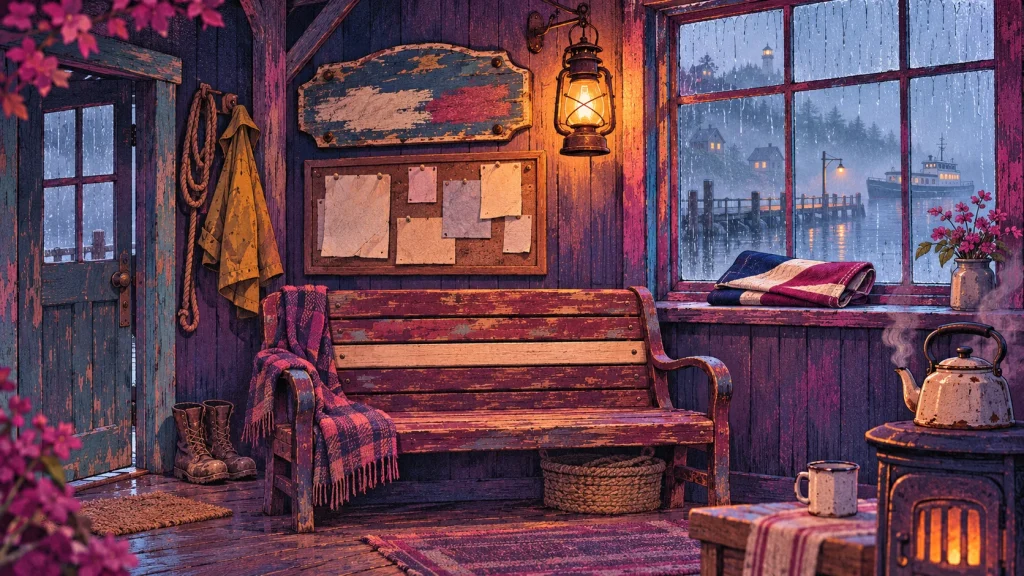

You’ve arrived early for the last ferry. Rain is tapping against the window, your socks are damp, and the boat is still somewhere beyond the harbour wall. There’s nothing to do but sit down.
So you notice the bench.
Most of its wooden slats are dark and smooth. One is pale, recently fitted, with a knot that looks a little like an eye. Beside the window hangs a folded flag. Someone has put a chipped mug under a leak, and a woman near the door is arguing with the ticket clerk about what this landing is called.
We’ve just invented a ferry waiting room. It has no grand map, royal family tree or list of ancient wars. Yet there are already things to wonder about. Who fixed the bench? Why is the flag indoors? Why do two people disagree about a name?
A small place can offer plenty to work with. Let’s stay here until the boat arrives.
Give someone a reason to be here
Before filling the room with history, think about what happens in it today. People buy tickets, shelter from the weather, wait for someone or try to leave. A clerk keeps an eye on the harbour. A traveller searches for a dry seat.
That gives us a way into the details. The traveller sees the new slat because they’re looking for somewhere to sit. They hear the disagreement because it’s happening beside the ticket window. Nobody has to stop the story and deliver a lecture on the island.
For a comic, you might let the pale wood catch the eye in a quiet panel. In a game, the player might choose to inspect the bench while waiting for the clerk. In a short story, somebody could complain that the repair has left the seat uneven.
The same object can enter the scene in different ways. What matters is giving it a place in somebody’s ordinary business. If everyone has come here to catch a boat, the room should still feel useful for catching boats.
The bench has had a life
Let’s decide that last winter’s storm pushed water through the waiting room. The bench survived, but one slat split. A local boatbuilder repaired it with a piece of timber left over from another job.
We could tell the reader all of that immediately. Or we could begin with the pale wood and let the rest appear when it matters.
Perhaps the traveller runs a hand over the repair. The clerk says, “Mind that edge. Len keeps promising to sand it.” A moment later, Len comes in carrying a bag of shopping and pretends not to have heard.
Now the repair gives us more than evidence of a storm. It gives us two people who know each other, a job that’s almost finished and a small disagreement that may have been going on for weeks. We can imagine life continuing after our traveller has gone.
There’s a useful choice here. If every object is ruined, the room may feel abandoned. If some things are worn and others have been carefully mended, it suggests people are still looking after it. The bench can be old and loved. It doesn’t have to be mysterious.
You can leave Len’s full history for another day. For this scene, a slightly awkward repair and an unfinished promise may be plenty.
Show what people do differently now
The flag beside the window belongs to the landing crew. In our invented harbour, they hang it outside when it’s time for passengers to gather at the gate.
It used to stay out between sailings. Since the winter storm tore the spare to pieces, the clerk brings the remaining flag inside, dries it and folds it away. Buying a replacement is apparently someone else’s responsibility. Everyone has an opinion about whose.
We’ve taken a bit of history and let it change a small routine. The clerk checks the harbour, lifts the flag from its hook and shakes out the folds. A regular passenger begins putting on her coat before anyone says the ferry is coming.
That moment tells us she knows the place. A newcomer might need the clerk to explain what’s happening. A child might try to reach the flag because raising it is the most exciting job in the room.
The routine also gives the scene something to move towards. While we’ve been looking around, the clerk has been watching for the boat. The room’s history sits alongside today’s departure, and eventually the flag will send everyone outside.
Try this with a place of your own: think of something that happened there, then ask what people now do differently because of it. Keep the answer small enough to show.
Let a name mean different things to different people
Now back to the argument by the ticket window.
The timetable calls this place Market Pier. The woman waiting for her ticket calls it Crow’s Landing. The clerk uses the newer name because that’s what visitors will see on their tickets. She uses the old one because she’s called it that all her life.
Neither needs to explain the whole dispute. “Six o’clock from Crow’s Landing, is it?” she asks. “Market Pier,” he replies, handing over her ticket.
That last part matters: he knows exactly where she means.
We could decide that the pier was renamed when the market moved there. For a stallholder, the new name might be a welcome sign that business is picking up. For someone whose home was knocked down to make room, it might feel less cheerful. The name gives different people different reasons to care.
You don’t have to bring every side into this one conversation. Choose the disagreement that belongs in the scene. Perhaps the woman is teasing a clerk she likes. Perhaps he’s tired of correcting people. Perhaps they both glance at a visitor and decide to explain it properly.
Leave them room to be people. A character who only appears to explain an old name can feel like another notice on the wall. A character trying to buy a ticket has somewhere to go.
Leave a little space around the story
By now, it would be easy to add too much. The bench could hide a secret compartment. The flag could bear a lost royal crest. The mug could belong to a missing sailor. The timetable could contain a code.
Any of those might suit another story. Here, we’re waiting for a ferry. Give the reader a few things worth noticing and let some of the room stay ordinary.
The chipped mug might simply be the nearest thing somebody found to catch a leak. Its place on the floor tells us something about the room today without demanding another mystery. A clean kettle and a stack of spare cups could suggest that waiting here is sometimes quite pleasant.
When deciding what to keep, picture the scene without a detail. Would we understand the people differently? Would the room lose some warmth, tension or sense of use? Would something happening later become confusing?
If the only loss is a paragraph of background you enjoyed writing, you can save that paragraph in your notes. You may find a better home for it later. The waiting room doesn’t have to carry the whole island on its noticeboard.
Try making a place from five details
Choose somewhere people pass through: a station café, a lift lobby, a tiny shop or a shelter beside a road. Give one person a simple reason to be there. Then choose five details to build the scene around.
Start with something that has been repaired. Decide who fixed it and whether anyone is pleased with the result. Add a routine that changed after something happened. Give two people different names for the same thing, with a reason each name matters to them.
For the fourth detail, choose an everyday comfort: a warm pipe, a friendly animal, a good seat. For the fifth, choose a small inconvenience someone has learned to live with.
Now write the person arriving and trying to do their simple task. Let them touch, use, hear or get in the way of those details. You don’t have to explain them all. See which ones naturally earn their place.
In our waiting room, the clerk has finally lifted the flag. Len gets up, tests the repaired slat with his palm and promises to bring sandpaper tomorrow. The woman at the ticket window heads outside, still calling the place Crow’s Landing.
The ferry has arrived. We’ve spent only a few minutes here, but there’s a little more to the island than there was when we came in.
Find more ideas about games, stories and imagined places in the GamersMess Journal.